

About this book
Bokar Rinpoche was born in Western Tibet in 1940 and is considered by his peers as one of the greatest meditation masters of our times. The brief text he has written for his disciples is presented here as Opening the Door to Certainty. Short and compact, Opening the Door to Certainty is a condensed version of the Ninth Karmapa's work, titled The Ocean of Certainty.
The Karmapas are as well known in Tibet as the Dalai Lamas. They have headed the Tibetan Buddhist Karma Kagyu lineage of reincarnate masters since the 12th century and are the direct successors of Tilopa, Naropa, Marpa, and Milarepa.
The Ninth Karmapa, Wangchuk Dorje (1556-1603) wrote several works on meditation. His most comprehensive and renowned text is The Ocean of Certainty (Ngedon Gyamtso). This voluminous book, not yet translated into any Western language, is a major classic of the Kagyupa School. It is generally used by the lamas to teach meditation.
The term certainty (or absolute truth, absolute meaning, definitive meaning, true meaning) used in the title of the texts mentioned above designates the direct understanding, through experience, of the absolute nature of the mind beyond the psyche and its fluctuations, beyond concepts and emotions, beyond birth and death, and beyond space and time. The term is also used in a parallel way with the pedagogic meaning (or pedagogic truth) referring to the methods used in the psychological or conceptual domains to aid in the understanding of certainty. Certainty is thus linked with absolute truth and wisdom, whereas the pedagogic meaning is associated with relative truth and skillful means.
Certainty is furthermore an equivalent term for Mahamudra, a Sanskrit word signifying great seal or great symbol. Bokar Rinpoche introduces Mahamudra in the following way: The subject of our study is Mahamudra. Mahamudra is also the mind. We call the mind that which knows, feels, and produces suffering, happiness, thoughts, sensations, feelings, and so on. We will st
You may also like
More in Buddhism →
1000 Buddhas Of Genius
T.W. Rhys Davids
Rs. 2,880
108 Metaphors For Mindfulness
Arnie Kozak
Rs. 2,238
12 Steps On Buddhas Path Bill Buddha And We
Laura S
Rs. 1,660
A Buddhist Bible
Dwight Goddard
Rs. 795

A Bull Of A Man Images Of Masculinity Sex And The Body In Indian Buddhism
John Powers
Rs. 1,912
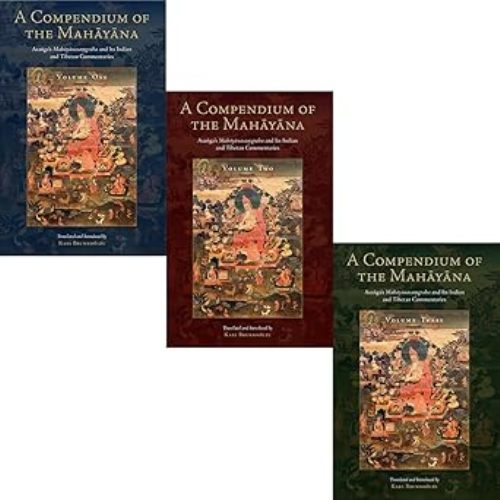
A Compendium Of The Mahayana Asangas Mahayanasamgraha And Its Indian And Tibetan Commentaries 3 Volume Set
Asanga,Karl Brunnholzl
Rs. 20,400

A Dakinis Counsel Sera Khandros Spiritual Advice And Dzogchen Instructions
Sera Khandro Dewai Dorje,Christina Lee Monson
Rs. 3,678
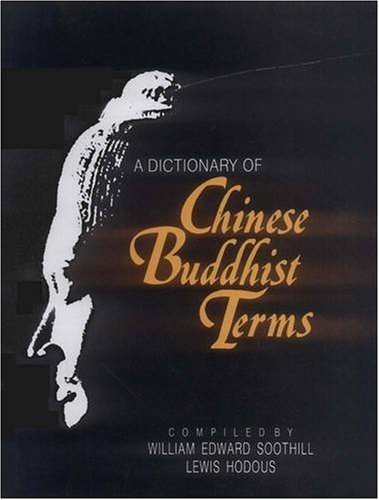
A Dictionary Of Chinese Buddhist Terms
W.E. Soothill
Rs. 2,072